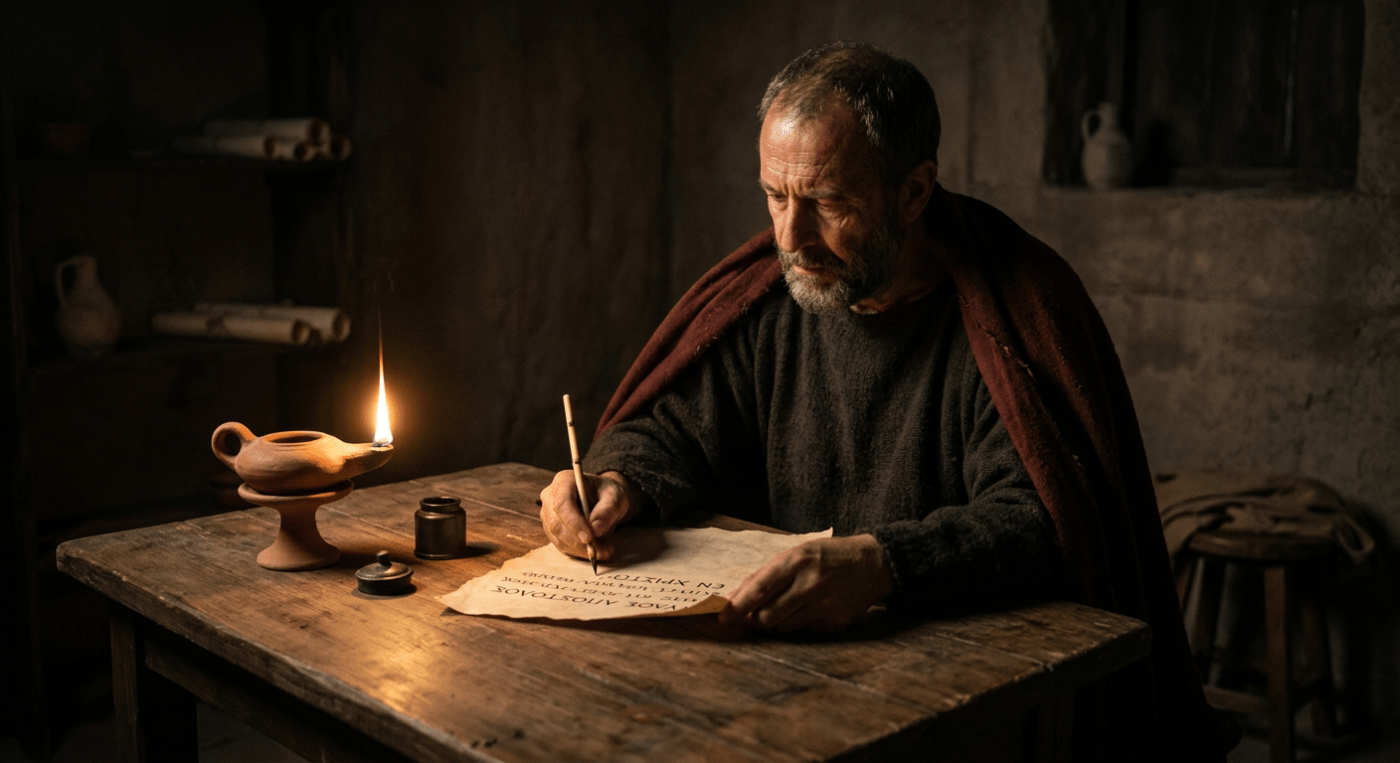
Hi Friends, this week, I begin a new series through the book of First Thessalonians.
We begin by looking into why Paul wrote this letter, the historical background of the place and how the church was formed and a brief overview of what Paul addresses in this letter. I hope you will join me and I pray that you will be blessed by it.
Purpose of the letter
First Thessalonians is a letter written by Paul to a young church in the city of Thessalonica (modern-day Thessaloniki in Greece). The main purpose of the letter was to encourage the Thessalonian believers who were new to their faith and surrounded by a lot of opposition to stand firm through the testing of their faith, to encourage them to be holy in the midst of pagan ways, and to encourage them to look to their hope, the return of Christ.
Historical Background
The city of Thessalonica was a thriving city; it served as the capital and major port of the Roman province of Macedonia. Thessalonica was a free city under Roman rule. Following the Battle of Philippi in 42 BC, Rome granted it this status. While they did not have a permanent Roman garrison, they neither did have the full status of a Roman colony and were allowed to rule themselves under the supervision of the provincial governor. Since they enjoyed this status, they were careful about any disruption that could strip them of the same.
When and How the church was founded
The church of Thessalonica was founded by Paul around 51/52 AD after a 3 week visit during his second missionary Journey, which is detailed in Acts 17.
According to the passage from Acts, Paul arrived in Thessalonica and addressed the synagogue over the course of three Sabbaths and succeeded in establishing a Christian community. However, his efforts were met with opposition and persecution. In Acts 17:7, opposers of Paul claimed his followers were acting against the decrees of Caesar, stating, “They are all defying Caesar’s decrees, saying that there is another king, one called Jesus”. This likely refers to Roman decrees established by Augustus and reaffirmed by his successor Tiberius that forbade predicting a change in leadership. Following a riot and the arrest of a follower named Jason, Paul, Silas, and Timothy subsequently departed the city.
The Thessalonian church consisted of a mix mostly of gentile believers and some Jewish believers. This epistle was written while Paul was in Corinth around 52/53 AD, about one year after he had founded the church.
Brief overview of what this Epistle addresses
Paul commends the Thessalonians for their strong faith, perseverance, and enduring hope. One of the primary focuses of the letter is the second coming of Christ and how to live considering eternity. This epistle is 5 chapters long. Paul concentrates on the return of Christ in Chapters 4 and 5 of this epistle, but every chapter ends with a reference to the return of Christ.
The letter of 1 Thessalonians is very relevant for us. In a society where there is growing opposition to Christianity, the reduction of moral standards, and a bent to living for the here and now, 1 Thessalonians encourages us to persevere, to live righteous and holy lives, and to live with the hope of Christ’s glorious return. Living with eternity in mind, fuels us with a hope that strengthens and encourages us to be faithful and persevere when trials and temptations come in this life.
God Bless.


Ooh! I’m so excited for this, Manu! Yay!
LikeLiked by 1 person
Thank you my friend 🤗💕
LikeLiked by 1 person
You did a fantastic job summarizing 1 Thessalonians and Paul’s core message. It was also interesting to learn more about the area where it took place. Thanks, Manu! 🙂
LikeLiked by 1 person
Thank you so much, Nancy 😊💕
LikeLiked by 1 person
Looking forward to the series!
LikeLike
This is a great intro, Manu. Some of these key details aren’t always easy to capture in our regular Bible reading. I’m looking forward to the series ahead.
LikeLiked by 1 person
Thank you so much, my friend 🤗💕
LikeLike
I can only imagine how wonderful this series is goign to be… Looking forward to it…
LikeLiked by 1 person
Thank you so much Willie, truly means a lot.
LikeLike
Nice (Church) History Lesson, Manu! I think it’s something we should not fail to include in Bible Study 🙏🏾💕🙌🏾🙌🏾
LikeLiked by 2 people
Thank you Tam 💕😊
LikeLiked by 1 person